
Predictive Dialer for iGaming: How Outbound Automation Reactivates Players at Scale

Every iGaming operator is sitting on a base of players who registered, deposited for a while, then went quiet. Winning them back is worth far more than it costs, but the list is usually too big to work by hand before the moment passes. A predictive dialer is how a small team clears it: it places several calls at once and connects agents only to the players who pick up, turning a weeks-long reactivation list into a campaign that runs in days. This guide covers where predictive dialing fits in a player-reactivation strategy, where it doesn't, and the compliance rules to settle before a campaign goes live.
Quick answer
iGaming operators use predictive dialers to reactivate dormant and registered-but-never-deposited players at volume. The dialer places several outbound calls per available agent and routes each live answer straight to a rep, cutting the idle time between calls that quietly drains a reactivation campaign. It works best for high-volume outreach with a full agent team. For a short list of high-value VIP players, a power dialer with a lead preview option that lets the agent prepare is the better fit.
Why iGaming operators use predictive dialing
Most of an iGaming operator's revenue potential is already inside the database. Acquiring a new player through paid channels is expensive and getting more so, as competition for traffic keeps bidding acquisition costs up. Reaching a player who already knows the brand costs a fraction of that, which is why outbound calling has earned a place in the retention mix rather than staying a pure sales channel.
A phone call also does something email and push notifications rarely manage with a lapsed player: it opens a real conversation, surfaces why they left, and can carry a personalized offer in the moment. The catch is timing and volume. Reactivation windows are short, and a dormant list can run into the tens of thousands, so the work only pays off if a small team can move through it fast.
That is the job predictive dialing is built for. Instead of a rep dialing one number, waiting through the rings and voicemail, then logging the result before the next call, the dialer places calls ahead of agent availability and routes each live answer to whoever is free. Answering machine detection filters out voicemail, busy tones, and numbers that ring out, so agents spend their time talking to players instead of listening to dial tones.
Where predictive dialing fits (and where it doesn't)
Predictive dialing suits the parts of reactivation that are high in volume:
- Dormant player reactivation. A cohort of players who haven't logged in or deposited for 30 or more days, where the list runs into the thousands and no small team could dial it by hand in a useful window.
- Registered-no-deposit follow-up. Reaching people who signed up but never funded an account, while the registration is still recent enough to matter.
- Broad retention nudges. Time-sensitive outreach tied to a campaign or a lifecycle trigger across a large segment.
Where it is the wrong choice is high-value VIP hosting. When each conversation is worth a lot and needs a prepared, personal touch, a preview dialer lets the agent read the player's history before the call connects. Reactivating a big dormant base and looking after a short VIP list are different jobs, and predictive dialing only answers the first.
The same logic sets a floor on team size. The pacing algorithm needs a steady flow of live answers to work against, so below roughly eight to ten agents there aren't enough concurrent calls to pace accurately, and a progressive dialer usually keeps abandonment lower for a smaller team.
Compliance and responsible gambling
Outbound calling for gambling sits under two layers of rules, and both matter before a campaign goes live.
Abandoned Calls Threshold
The first is the general limit on abandoned calls, meaning the answered calls that arrive with no agent free to take them, a byproduct of the dialer placing more calls than it has reps ready. In the US, the FTC's Telemarketing Sales Rule and the FCC cap abandoned calls at no more than three percent of answered calls, measured over a 30-day period. Other markets set their own thresholds, such as Ofcom's in the UK, so the exact figure depends on where your players are. A predictive dialer meant for regulated outreach should let you set an abandonment target and pace against it automatically.
Marketing Consent Management
The second layer is specific to gambling. Marketing consent has to be in place before you call, self-excluded players must be scrubbed from every list, and do-not-call and opt-out records have to be respected on every campaign. Requirements differ by licence and jurisdiction, from the UK Gambling Commission to the Malta Gaming Authority and beyond, so a list that is legal to call in one market may not be in another. The practical takeaway: treat list hygiene and consent as part of campaign setup, not an afterthought, and pick a dialer that can enforce those rules rather than leaving them to the agent.
Predictive dialing in practice
Picture an operator with 40,000 players who haven't deposited in over a month, and a team of a dozen agents to win them back. Dialed by hand, that list would outlast the window in which the outreach is still relevant. With predictive dialing, the same team can work the full cohort in days.
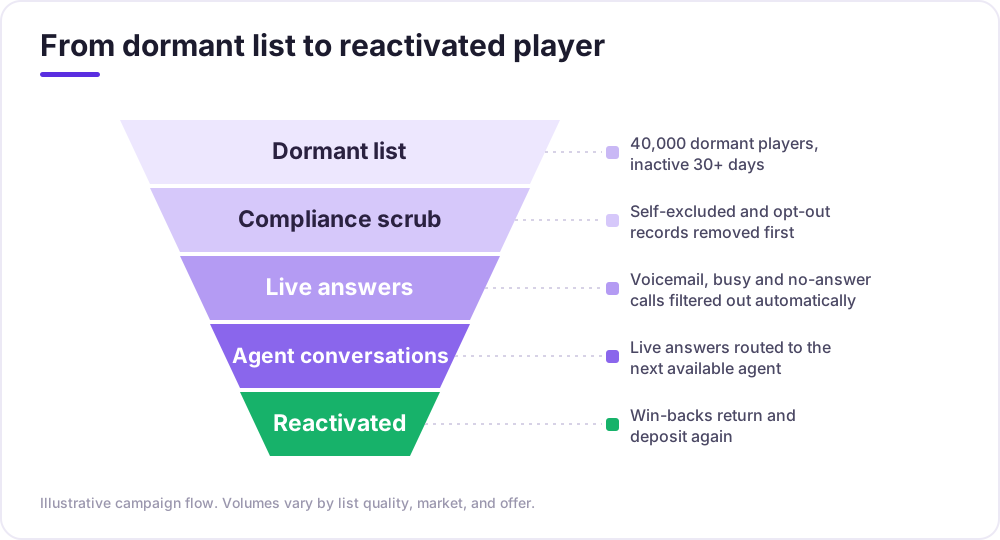
The campaign scrubs the list against self-exclusion and opt-out records first. The dialer then paces calls against a set abandonment target, uses answering machine detection to skip voicemails, and routes live answers to whichever agent is free. Numbers that ring out aren't lost: Squaretalk's predictive dialer can auto-redial missed leads with List Recycle Rules, so a no-answer at 2pm gets another attempt later rather than dropping off the list. Its Workflow Builder can fire a follow-up SMS when a call gets a particular disposition, and outcomes sync back to the CRM so the next campaign starts from cleaner data.
For operators that want to run reactivation without adding agents at all, AI voice agents can handle the first-contact layer and hand warm players to a human.
Frequently asked questions
Which players belong in a predictive reactivation campaign? Start with the cohorts where volume and intent line up: players who deposited before but have gone quiet for 30 or more days, and registered-but-never-deposited sign-ups while the account is still recent. Keep high-value VIPs out of the predictive list, since they warrant a preview dialer and a prepared, personal call. And scrub self-excluded and opted-out players before the campaign runs, not after.
How many agents do you need to run a predictive dialer? Enough for the pacing algorithm to have live answers to work with, which in practice means a fuller team rather than a couple of reps. Below roughly eight to ten agents, a power preview dialer usually delivers better results, because the predictive model can't pace accurately against a handful of concurrent calls without pushing up the abandonment rate.
Does predictive dialing hurt answer rates or get numbers flagged as spam? It can, if it's run carelessly. High call volumes from the same numbers are what get a line labelled "Spam Likely," which drags answer rates down across the whole campaign. Rotating numbers, keeping abandonment low, and monitoring caller ID reputation with a tool like Spam Checker all help protect the answer rates a reactivation campaign depends on.
Is predictive dialing legal for iGaming outreach? Yes, within the rules. You need valid marketing consent to call, you have to scrub self-excluded and opted-out players from the list, and you must stay under the abandoned-call limit for the market you're calling. Those requirements vary by jurisdiction and licence, so the same list can be compliant in one country and not in another. Build the checks into campaign setup rather than trusting them to the moment of dialing.
Take the next step
Reactivation is where a predictive dialer pays off for iGaming teams, provided the volume, the agent count, and the compliance checks are all in place. If you're weighing outbound calling as part of your retention mix, our team can walk you through how it fits an outbound sales and retention platform and where predictive dialing does and doesn't apply. For more on pacing and list management, see our predictive dialing best practices, or talk to our team about your reactivation goals.
Compliance details (abandonment thresholds, consent, and self-exclusion requirements) vary by jurisdiction and change over time. Last verified July 14, 2026.